Expose your local development web service to the world with Localtunnel!
No need to fuss with DNS and firewall settings
- Simply install Localtunnel (which requires NodeJS) globally and use the command line interface to request a tunnel to your local server.
- You'll receive a unique, publicly accessible URL that will proxy all requests to your locally running webserver.
- Just share the URL with anyone you want to have access, and as long as your local instance of Localtunnel remains active, all requests will be routed to your local service.
- Quick and easy!
Install
npm install -g localtunnel
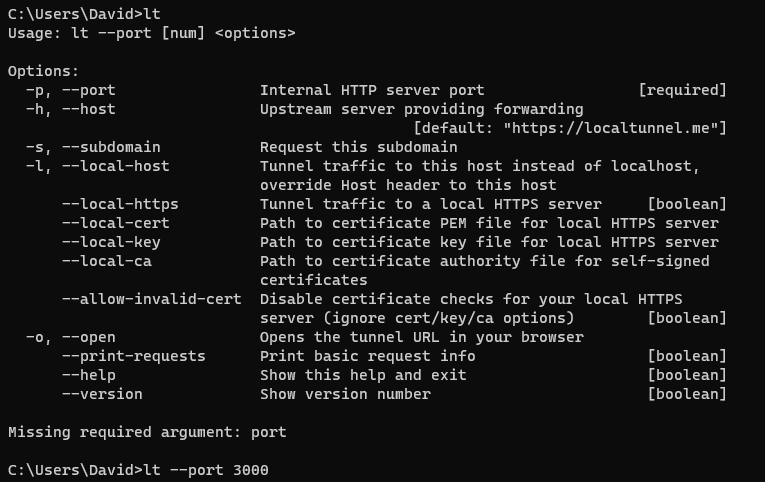
Start a webserver on some local port (eg http://localhost:8000) and use the command line interface to request a tunnel to your local server:
lt --port 8000
As long as your local instance of lt remains active, you will be given a unique URL, such as https://flkajsfljas.loca.lt, which can be shared with anyone. All requests made to this URL will be directed to your local service at the specified port.